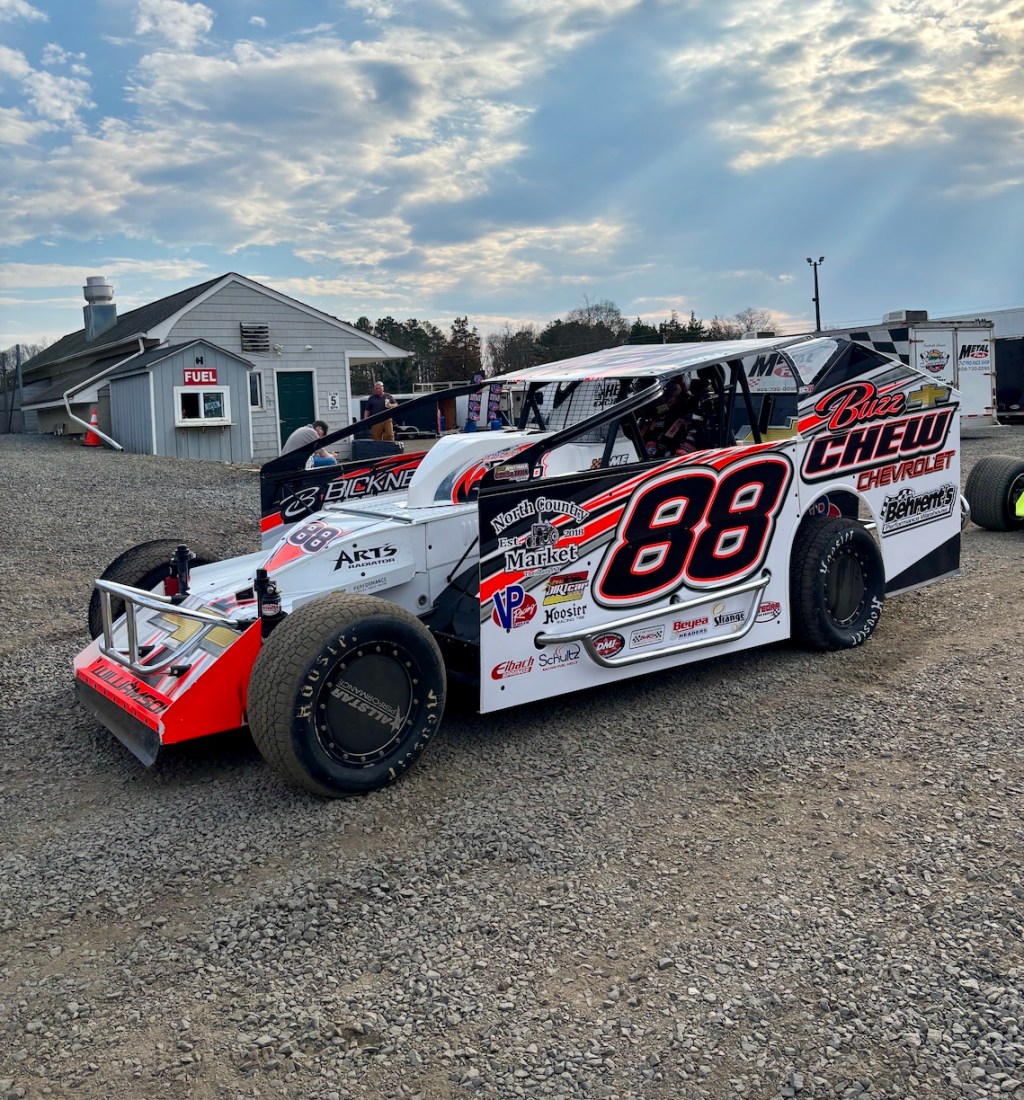
Text and photos by Mike Charopka
Imagine yourself participating in a high-adrenaline show. You are always away from home and perform in over 80 events within a 52-week year. The world around you consists of endless highways, pit areas, shops, and speedways. Your family is also involved in this nomadic lifestyle. They willingly embrace the rhythm of life as dirt track racers. Few outsiders truly understand this passion, but I managed to lift the curtain slightly, taking a peek into this “vagabond high-speed circus.” Last Saturday, I visited New Egypt Speedway in New Jersey to learn more. I would have seen and understood far less without the dedicated people who guided me through these familiar yet mysterious waters.
What are Modifieds?
First, let me explain briefly the history of this motorsport discipline.
Stock car racing is one of America’s oldest forms of motorsport, beginning in the early 20th century when farmers, moonshiners, and mechanics raced modified vehicles on local fairgrounds and fields for glory and bragging rights. Early modified cars were primarily street-based models, such as 1930s Ford Coupes. They were extensively modified for better speed and performance. What’s funny is that the Modified racing existed before NASCAR’s formal establishment. As corporate interest in stock car racing grew, these older vehicles transitioned into the Modified racing class. At the same time, newer, commercially appealing models evolved into today’s NASCAR Cup Series.
Nevertheless, Modified racing preserved its charming raw authenticity. After standardization in the 1980s, modern Modified cars adopted more uniform designs yet maintained strong grassroots connections. Regions like New York, Pennsylvania, and New Jersey became heartlands for Dirt Modified racing, producing legendary champions such as Frankie Schneider and Buzzie Reutimann. Tracks like Bridgeport Speedway and New Egypt Speedway serve as examples of this motorsports culture. Devoted fans and fierce competition highly support it.
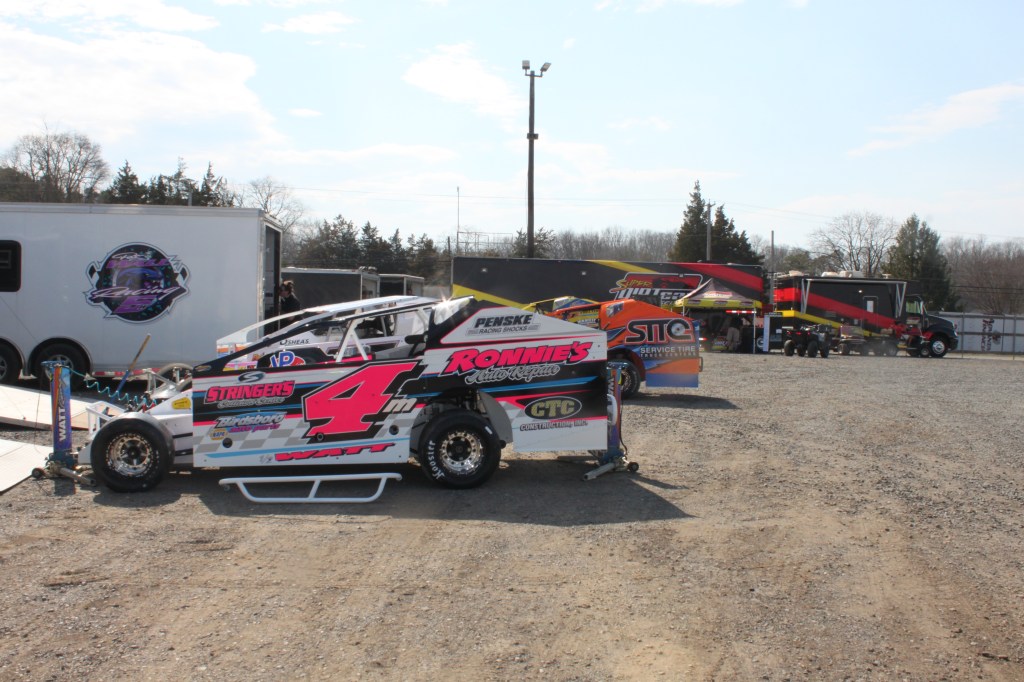
At my first encounter, the Modifieds at Bridgeport Speedway in New Jersey left a strong impression on me. These brutal-looking cars didn’t resemble sleek NASCAR stock cars or streamlined IndyCars. These were metal monsters sliding through corners, and aesthetics in their design played a minimal role here.
Welcome to New Egypt
Unlike Ancient Egypt, New Egypt, NJ is surrounded by pine trees and farmland. Traveling from I-95, I passed picturesque farms, roadside markets, quirky spots with mid-century signage, whimsical backyard sculptures, and even a crossroads tavern with choppers in front of it. Soon, I arrived at the expansive parking lot of New Egypt Speedway. Participant trailers were already pulling through gates toward the pit area.
After quickly securing my media credentials, I headed directly to the pits. Passing the technical inspection area, I entered a semicircle where mechanics prepared cars, adjusted suspensions, and made final tweaks ahead of the race. The pit area buzzed with activity yet retained practiced calm—until engines roared to life.
Enters Peter Reynolds
I initially connected with Peter Reynolds via LinkedIn. He is a Brand Ambassador at Crackers Motorsports Marketing, specializing in motorsports sponsorships and marketing. Peter has been deeply engaged in Northeast dirt racing for decades. His home track is Orange County Fair Speedway in Middletown, New York. He quickly offered assistance after I told him my intention to write about the sport.
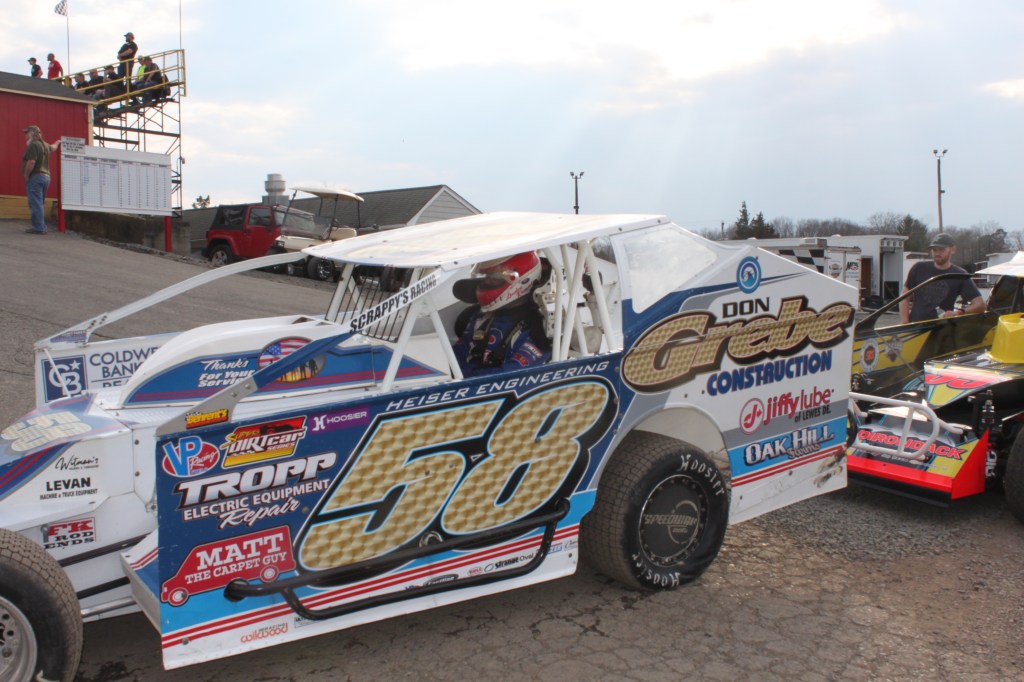
Peter immediately began guiding me through the pits. One of the first characters Peter introduced me to was Ace Lane Jr., a legendary motorsports photographer with about 60 years behind the lens. Lane, representing three generations of photographers, has numerous awards honoring his exceptional motorsports photography. He eyed my shiny new green media jacket with pale blue eyes, noting two things: he liked the jacket, but my Canon camera was “yack.” According to Ace, real racetrack photographers only shoot with Nikon. Understanding this old inside joke, I laughed, and we continued our tour.
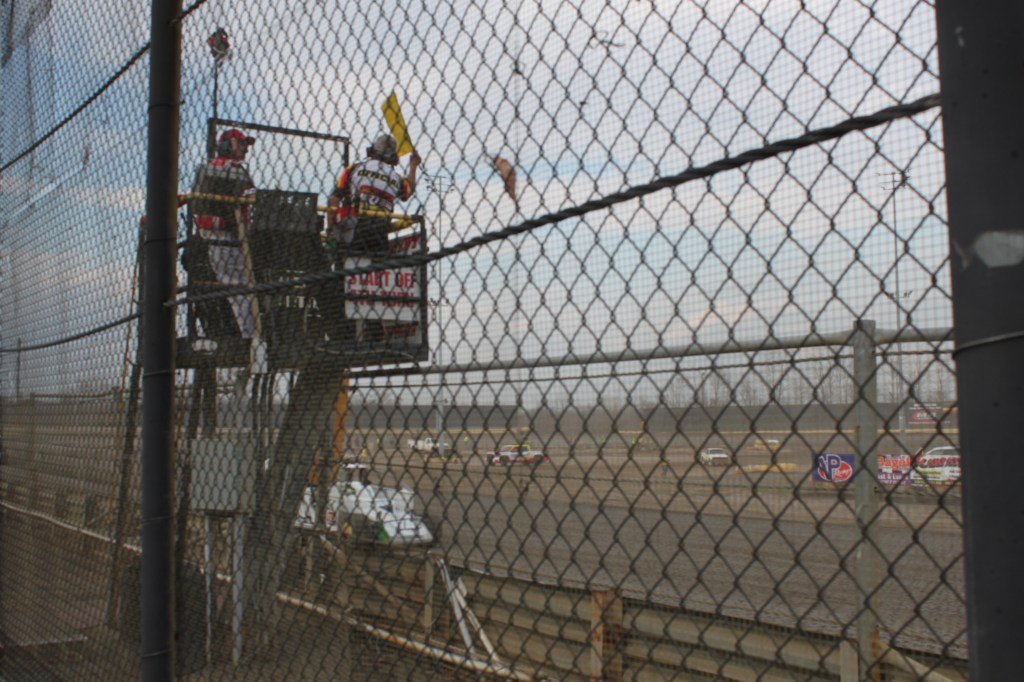
Next, I met Dave Farney, a dedicated flagger for the DIRTCAR organization with over 30 years of experience. The next time, I saw Dave at work two hours later. He waved race flags staying in the flagger’s tower above the dusty track. It was just impressive.
Racers
Peter introduced me to three notable racers, whom I briefly interviewed:
Tanner Van Doren, Schnecksville, PA:
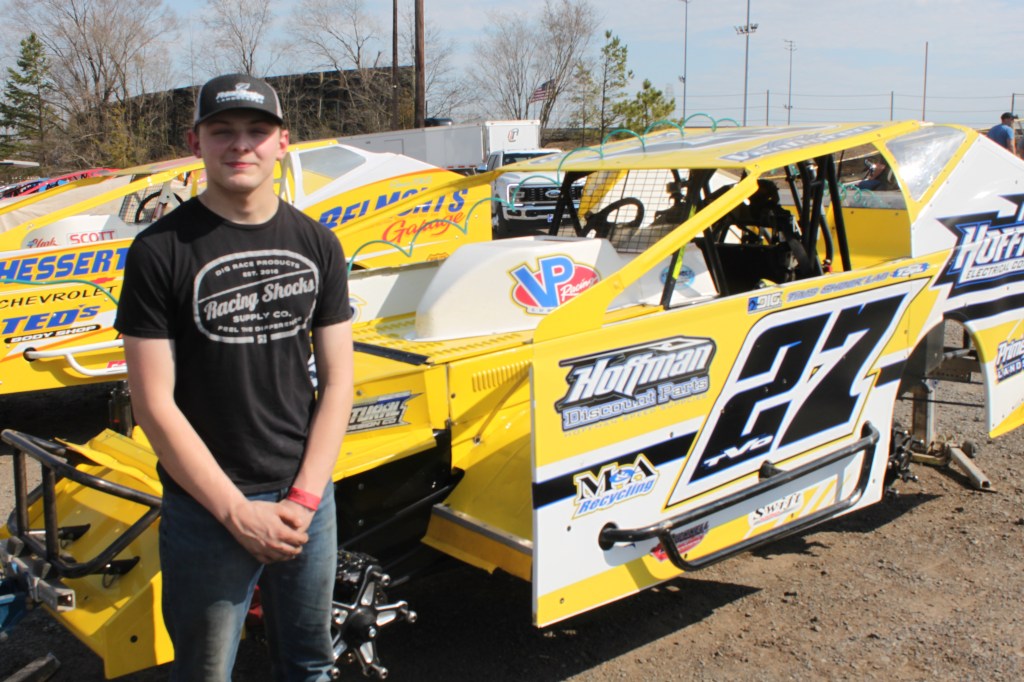
At just 17 years old, Tanner balances school with his dream of professional racing. With more than 50 races a year, he adapts flexibly to racing uncertainties.
Peter Reynolds: “This track is Tanner’s home turf, hosting about 20 Saturday-night events per season. Tonight is special—the Super DIRTcar Series is here. Tanner impressed us last year, and we hope for another standout performance.”
Mat Williamson, St. Catharines, ON:
Mat Williamson was a defending champion of the Super DIRTcar Series. He entered the season driven by past successes. His apparent goal was qualifying strongly, winning hot laps, and fiercely competing against around 40 elite dirt-modified racers.
Peter Reynolds: “Mat drives a Big Block Chevrolet, pushing around 850 horsepower through aftermarket parts. The real challenge for the driver was to adapt to changing track conditions. The track starts with a grip but slicks up later, requiring constant adjustments. Mat handles these conditions through precise throttle control and driving adjustments.”
Mat also explained the racing strategy, “Sometimes you race low, other times you build momentum high. Picking the right passing lane is crucial and especially challenging for newcomers.”
Alex Yankowski, Covington Township, PA:
For Alex Yankowski, racing is a lifestyle. He balances engineering studies at Penn State and dedicates about eight hours daily to racing preparations. The young racer spends around 135 days per year on the road, racing four days weekly. Racing since age four, Alex combines experience with youthful ambition.
“Today’s practice gave valuable insights into the New Egypt’s track,” Alex said confidently. “I’m aiming to qualify well for a strong starting position.”
Peter Reynolds highlighted Alex’s dedication. He noted, “Alex raced in Georgetown, Delaware, last night, drove straight here, and will head back to Pennsylvania tomorrow, maintaining a relentless schedule.”
Spectator’s Perspective:
This was the second event for Kyle. He drove three and a half hours due to a family friend’s participation. Though excited, Kyle admitted his busy schedule might limit future attendance.
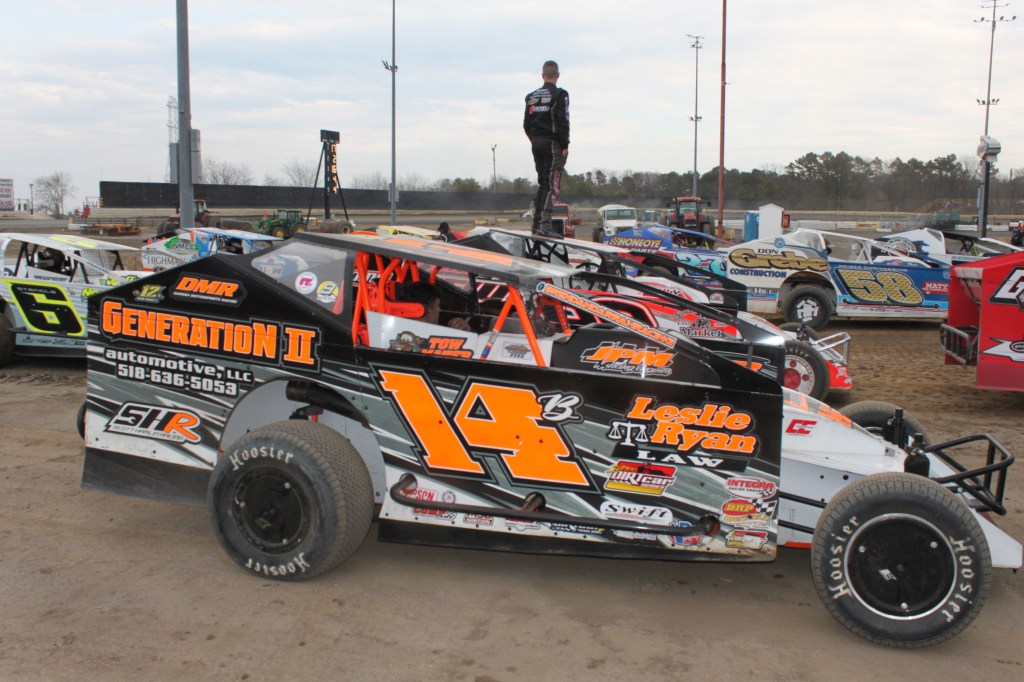
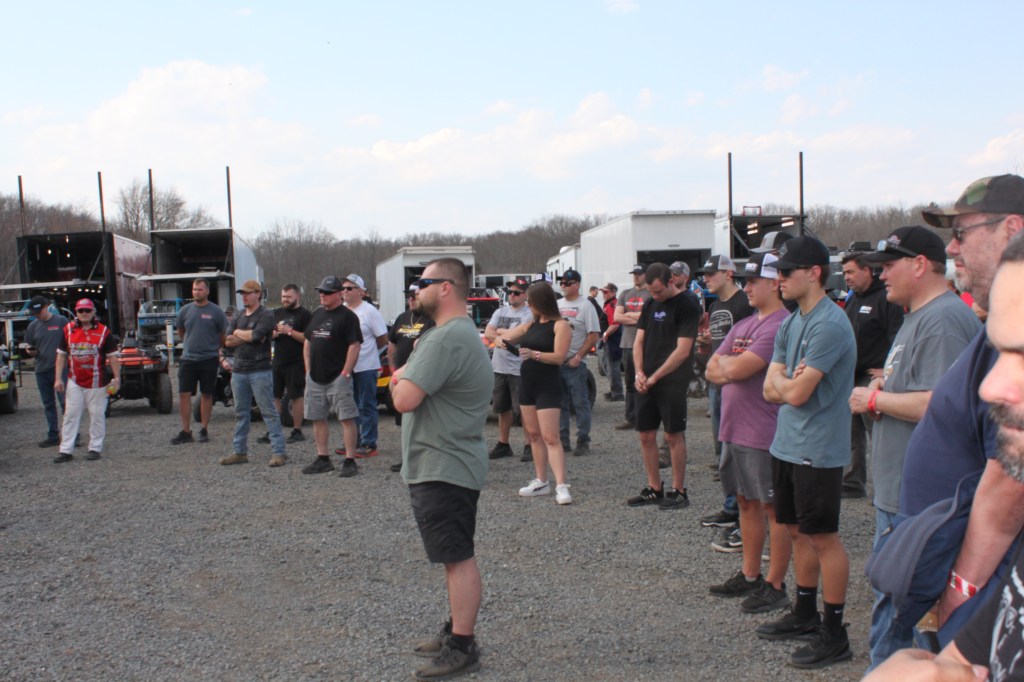
Driver’s Meeting
Right before the warm-ups, I went to the drivers’ meeting at four o’clock—briefings, which provided essential race information. Racers arrived on foot or driving quads, like NASCAR Truck series driver Stewart Friesen, whose trailer was distant.
Note: Stewart Friesen is a versatile driver who has a unique opportunity to participate in two significant autosports events: NASCAR and DIRT racing. Just a day before I saw him in New Egypt, NJ, he finished in the top 9 in Martinsville, VA, during the NASCAR Truck series there.
After opening with a prayer, the race director delivered logistical and other updates before racers swiftly returned to their cars.
Lens and Dirt
As the start time approached, I took my camera and headed to the race track. There, I met more photographers and decided to follow them to get my own shots of the action. After a while, the first racers started to warm up. I noticed the best locations for shooting and decided to take photos from the grandstand. I spent some time there.
A mesh fence separates the grandstand from the racetrack to prevent the audience from flying clay and mud. However, it didn’t help much against the dust and noise. The only door in that fence leads to the tower with a flagger. It was closed, but Dave Farney had already directed the drivers with yellow, white, green, and checkered flags.
People were still arriving, and there was a long line to the cashier for tickets. Another line stretched into the catering area, and some visitors checked merch.
Merchandising spots are a particular story worth mentioning. Besides the official selling points from the Speedway, folks offered general dirt racing stuff like bracelets, t-shirts, key gains, and more, as well as specialized team merch. Families installed wagons and sold hats, hoodies, and even car parts with autographs of their drivers. I spotted one guy carrying a car’s body piece, but the photo I took was blurry.
After examining the public area, I returned to the inner part of the circuit to take pictures of the cars during the hot laps.
Dust, Sweat, and Heart
The sun dipped low, and the Modifieds lined up for another run in the center of the track’s circuit. Some drivers sat inside the cars, while others got out and climbed on the roof to better see the track. The first six cars started their engines, and the qualification began.
Indifferent from the cars before, after the start of the hot laps, Ace Lane Jr. stood up and started to take pictures. I followed his example.
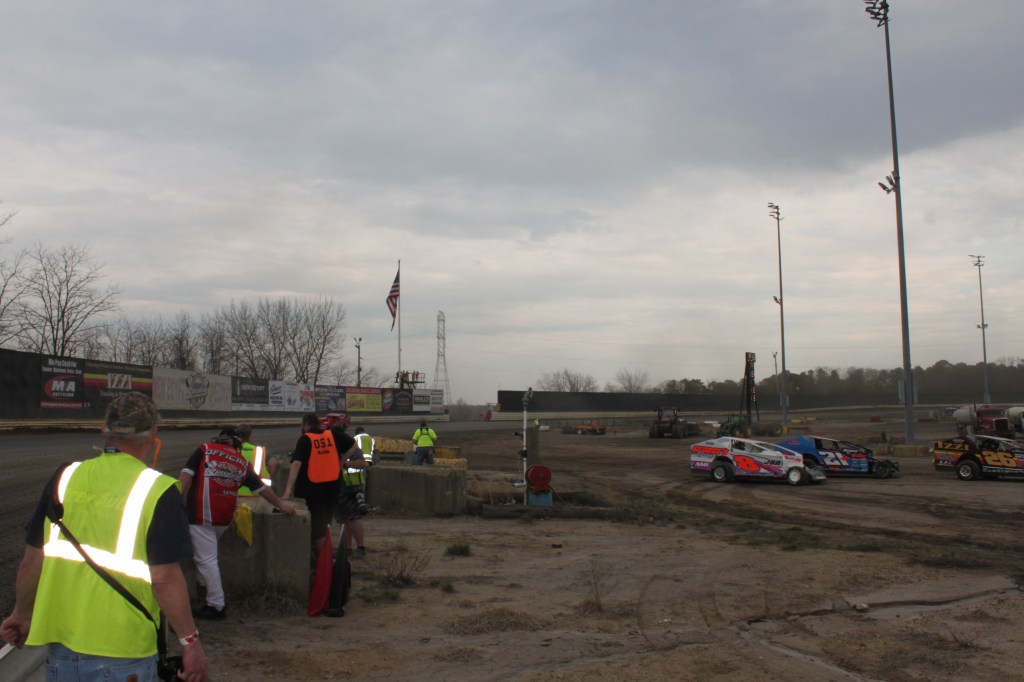
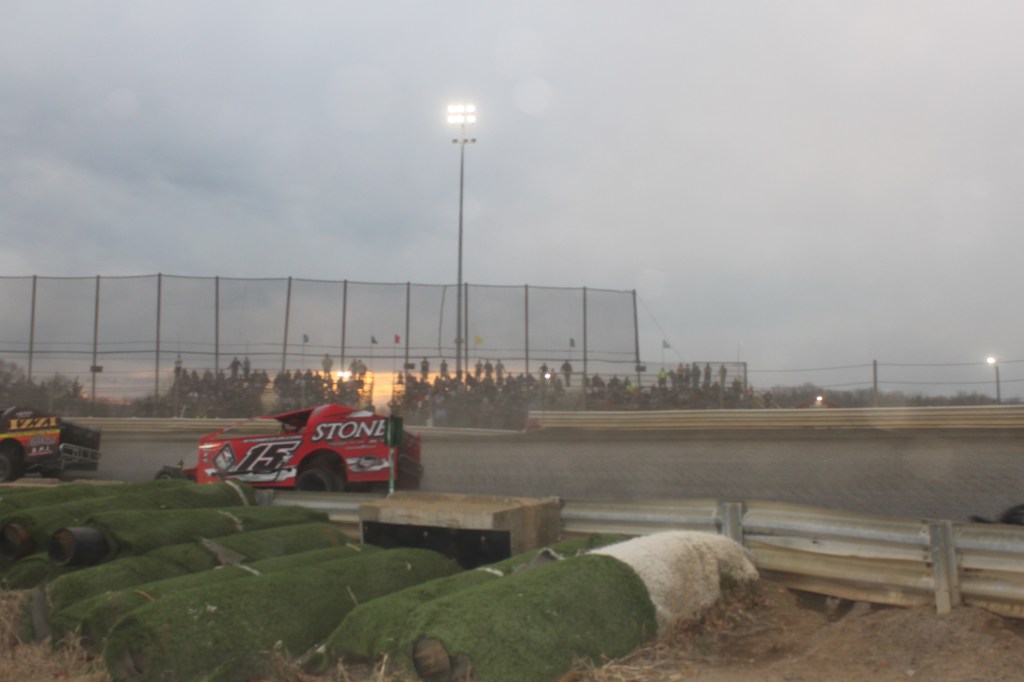
The cars went through the corners in parts of seconds and disappeared in the dust cloud near the flagger’s tower. I tried to take pictures, but my camera worked against me.
Then I noticed Stewart Friesen. He was in front of me on the track. I spotted the exact moment when he leaned right and, with strength, hit the gas. “He’s going to win this one,” I thought, and lately, it appeared I was right.
Leaving the Speedway
Soon, I had to leave the Speedway to return home earlier. I went to the parking lot, passing groups of fans still arriving. A family of Hindu spectators posed for selfies near their Toyota, and a few teens blasted music from a Ford F-150 nearby. The vibe was relaxed and communal.
I drove away dusty, tired, and absolutely hooked.
Cheers!
New Egypt Speedway, NJ
March 2025
Disclaimer: I wrote this piece, but I had AI help smooth out some rough edges—because even writers need a good co-driver!

 Racing Mindset
Leave a comment