Pictures by Flavien Duhamel / Red Bull Content Pool
Text by Mike Charopka
The 47th Dakar Rally was remarkable for many reasons. It was a grueling survival race for the top contenders, with many participants withdrawing due to medical issues. The event was filled with tactical moves, and, thankfully, this year, no fatalities occurred.
However, what stood out the most was the evolving race strategies. The organizers experimented with separating the starts for cars and bikes. Typically, cars benefit from following bike tracks, which reduces navigation challenges. But this year, nearly half of the stages had separate starts, forcing car crews to rely solely on their own navigation skills.
Some racers noted that bikers have a natural advantage when leading, as their unobstructed field of vision helps them spot hazards early. In contrast, car crews are confined to their cabins, which limits visibility. However, cars compensate with air conditioning, better comfort, and enhanced technology. While separate starts added intrigue, they also raised a crucial question: What is the best tactical approach to Dakar?
The Shift in Dakar Tactics
When I was a team manager, our crews believed the best approach was to push flat out and win as many stages as possible. However, this often led to crashes and withdrawals. A few Dakars later, we realized a smarter strategy: competing against the overall leader’s time rather than chasing stage wins. Once we adopted this mindset, we began seeing actual results.
There are multiple ways to win a two-week rally marathon; two recent examples illustrate this well.
• Carlos Sainz (Dakar 2024) won without claiming a single stage victory. The experienced Spaniard and his Audi team focused on consistency, reliability, and capitalizing on competitors’ mistakes. He placed second on stages 1, 6, and 9 and third on stage 11, but by avoiding major setbacks, he emerged as the overall winner.
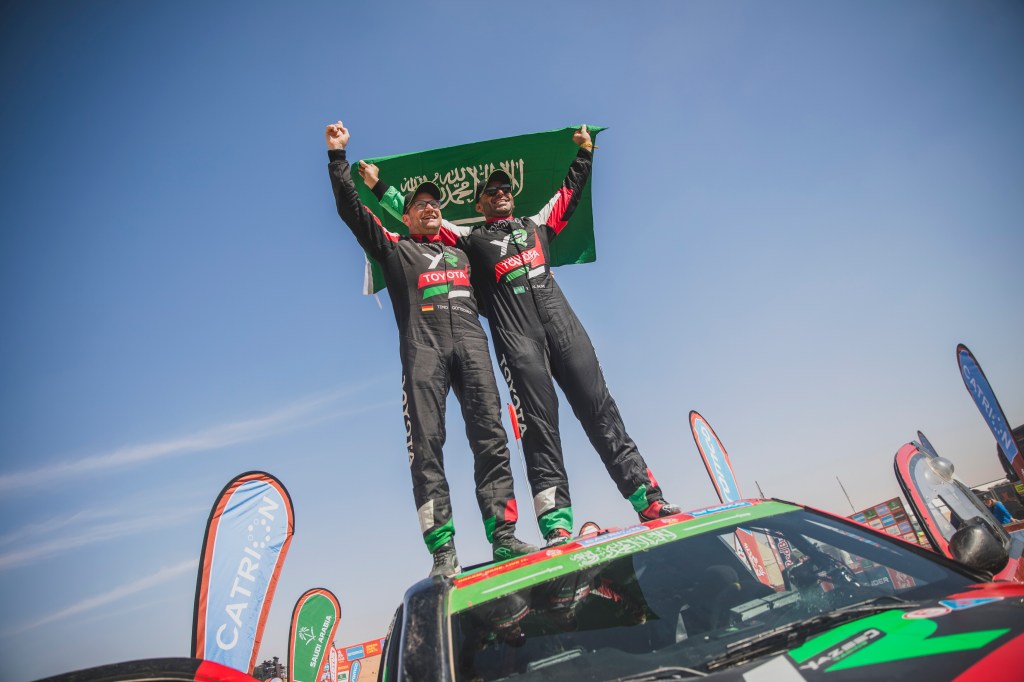
• Yazeed Al-Rajhi (Dakar 2025) employed a similar approach. He finished second on stage 2, first on stage 4, and third on stages 9, 10, and 11. He secured Saudi Arabia’s first-ever Dakar victory by avoiding mechanical issues and time losses.
The Problem with Stage Wins
A key tactical move this year was how top contenders intentionally avoided winning certain stages. On stage 2, with cars and bikes starting separately, Al-Attiyah, Al-Rajhi, and Loeb deliberately finished the 21st, 22nd, and 25th to avoid opening the road the next day and struggling with navigation.
This practice exposed a flaw in the system—winning a stage became a disadvantage. Race director David Castera acknowledged this issue in an interview with Auto Hebdo, promising to address it:
“We created more strategies than in previous years. This is something we need to neutralize in the future. What I want—and we must push for this with the FIA—is to always reward the stage winner. It bothers me to see top-level drivers aiming for 20th place on a stage just to avoid opening the road the next day and secure the rally victory. This is not the spirit I was looking for with this concept of separate routes. With the FIA, we need to find a solution so that the stage winner feels valued.”
Currently, there is a compensation system, but only for bikes. The Dakar Rally gives time bonuses to the first three riders who open the stage, encouraging them to push hard rather than slow down. However, no such incentive exists for cars, leading some drivers to finish lower to gain a better starting position deliberately.
Balancing Tradition and Innovation
The Dakar Rally has a long and storied history. It has survived challenges, rule changes, and relocations across three continents. Organizers have continuously adjusted the format to keep the event thrilling, safe, and fair.
Tactics will always be an organic part of this two-week race. Beyond raw speed, winning Dakar requires intellect, strategy, and technical skills. The right balance of these elements creates new champions. Hopefully, any future rule changes will benefit both racers and fans, ensuring that the Dakar remains the ultimate test of endurance and ingenuity.
 The Dustlap Dispatch
Leave a comment