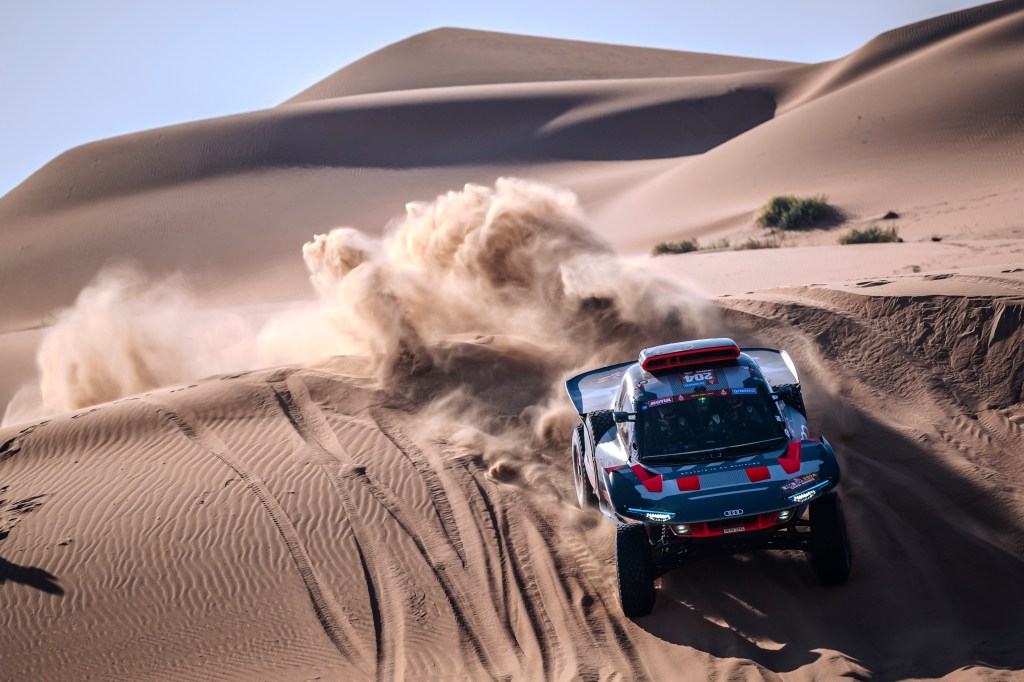
Pictures by Red Bull Content Pool, Dakar.com
Text by Mike Charopka
From prologues to marathon stages—everything you need to understand the race.
The Dakar Rally is coming soon, and many Americans will follow this event. This rally raid hasn’t been popular in the United States for decades. Nonetheless, some legendary racers like Robby Gordon and Ricky Brabec, along with others, paved the way for the North American participants of this most grueling rally marathon in the world.
In the following two posts, I’ll explain the basics of Dakar 2025.
Some Story Behind
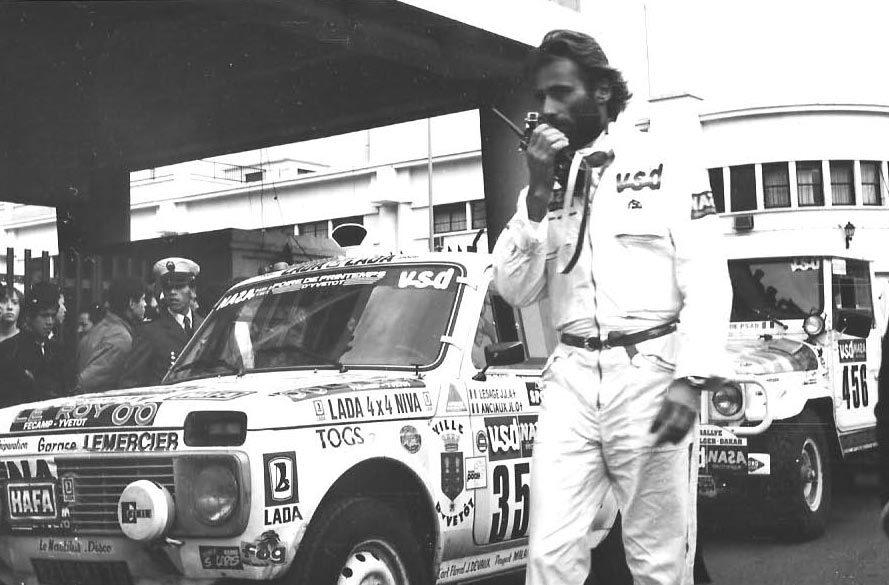
The history of the Dakar Rally begins in 1977, when a Frenchman, Thierry Sabine, got lost in the Libyan desert in Africa during the Abidjan-Nice Rally. He fell in love with the place’s nature and organized a rally marathon in those lands. In 1979, the first race caravan started from Paris to Dakar, the capital of Senegal.
What. When. Where
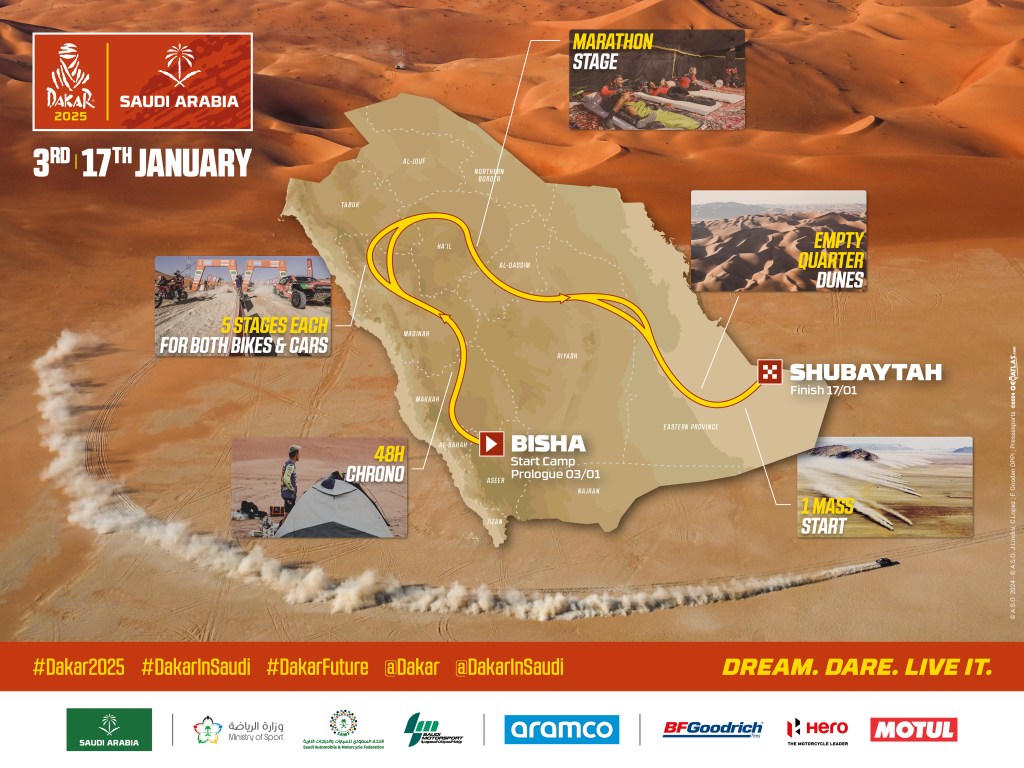
The Dakar Rally 2025 is scheduled from January 3rd to 17th, starting in Bisha and concluding in Shubaytah, Saudi Arabia. Before the event, every team must pass an administrative and technical inspection. The organizers ensure that all payments have been made, the vehicle documents are valid, and the vehicles and safety equipment comply with the rules.
Stages
The Dakar Rally is divided into multiple stages, all contributing to the overall standings. The winner is the team or racer finishing the entire route in the shortest time. There are twelve stages during the Dakar 2025. You can see them all here: Dakar 2025 Route Stage by Stage
The first day of the race is the prologue – a short, timed stage at the start of the race. It determines the starting order for the first full stage, giving faster competitors an advantage by avoiding dust and traffic.

Every stage contains a liaison and a special.
A liaison is an untimed route section that connects timed stages called specials. Competitors must drive liaisons to reach the start of the next timed stage or the bivouac. While liaisons don’t count toward the overall ranking, completing them is mandatory to stay in the race. Only the timed kilometers of the specials count toward the overall rally classification. There are more than 5200 kilometers (approx. 3230 miles) of special stages in this Dakar.
On January 10th, the participants will enjoy a rest day in Hail. At the same time, the mechanics will work hard to restore the vehicles so they can continue into the second half of the race.
One of the stages will be a marathon. On this multi-day stage, competitors must race without external mechanical assistance. The “marathon stage” will be Stage 4—Stage 5.
It’s critical to distinguish it from the new format of the Dakar stages – 48-Hour Chrono (Stage 1 – Stage 2). On most nights, competitors return to the bivouac, a central camp where teams can work on their vehicles. However, January 5 and 6 bring a twist—the 48-Hour Chrono. Racers push forward until 4:00 PM, then stop to camp in a remote area, spending the night outdoors. The following morning, they continue the stage to complete the section in 48 hours.
Navigation
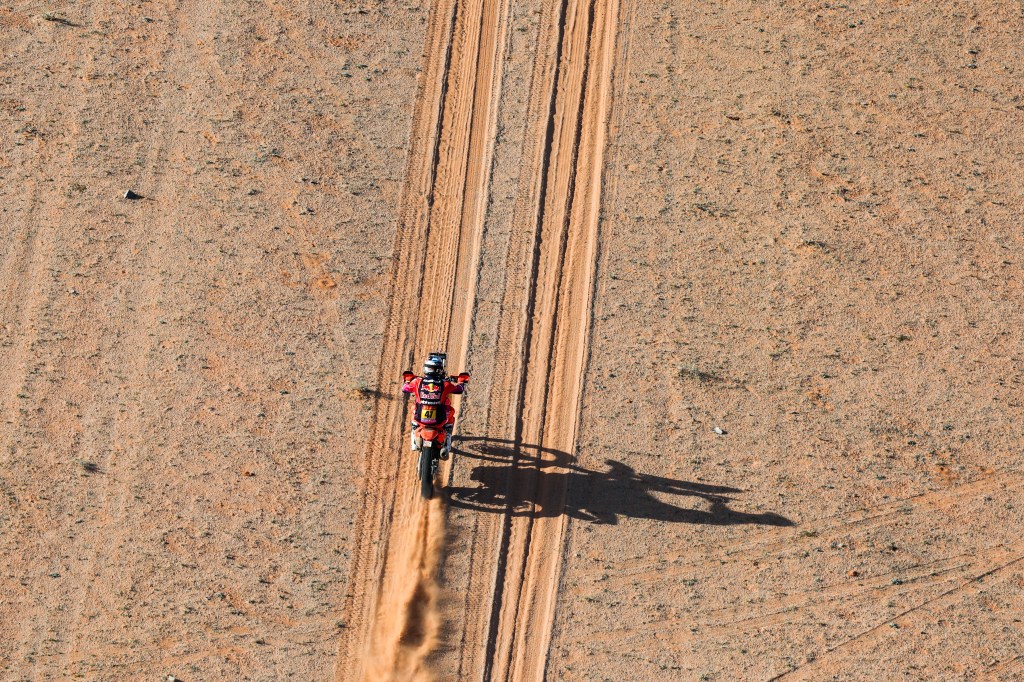
In the morning, minutes before the start, the racers receive a roadbook. It’s not a map, but it contains all the hazards and waypoints of the stage. The rules forbid GPS and maps. The co-pilots or individual racers (bikers) use road books and special equipment delivered by the organizers to collect all the waypoints and get to the finish line.

In the next post, we will discuss the competitors and whom you may choose to root for.
 The Dustlap Dispatch

Leave a comment